Becoming an End-of-Life Companion, Part 2: A Hole in My Heart
The other eleven volunteers and I gathered for the second time with two of our trainers. This time, we covered three topics.
❧ First, we were shown in detail how people at the end of their lives are cared for while still living at home. Many professions can be involved, from the general practitioner to palliative care, healthcare services, social services, and of course family and friends. Good communication between everyone involved is essential to provide the best possible care.
❧ The second topic of the evening was expectations, both what's expected of us and what we can expect from the hospice coordinators responsible for us. If you decide to accompany a dying person, it's clear that you need to be reliable and visit at least once a week for two hours. But you're also expected to report back to the coordinators if the patient's health status changes. In return, we can rely on the hospice staff to have our back: they're available 24/7, because you never know what might happen during a visit, and you might need immediate help. And since this work can be emotionally demanding, we also receive supervision once a month. If you're considering volunteering at a hospice, ask what kind of support they offer. Nobody should be left alone with difficult situations.
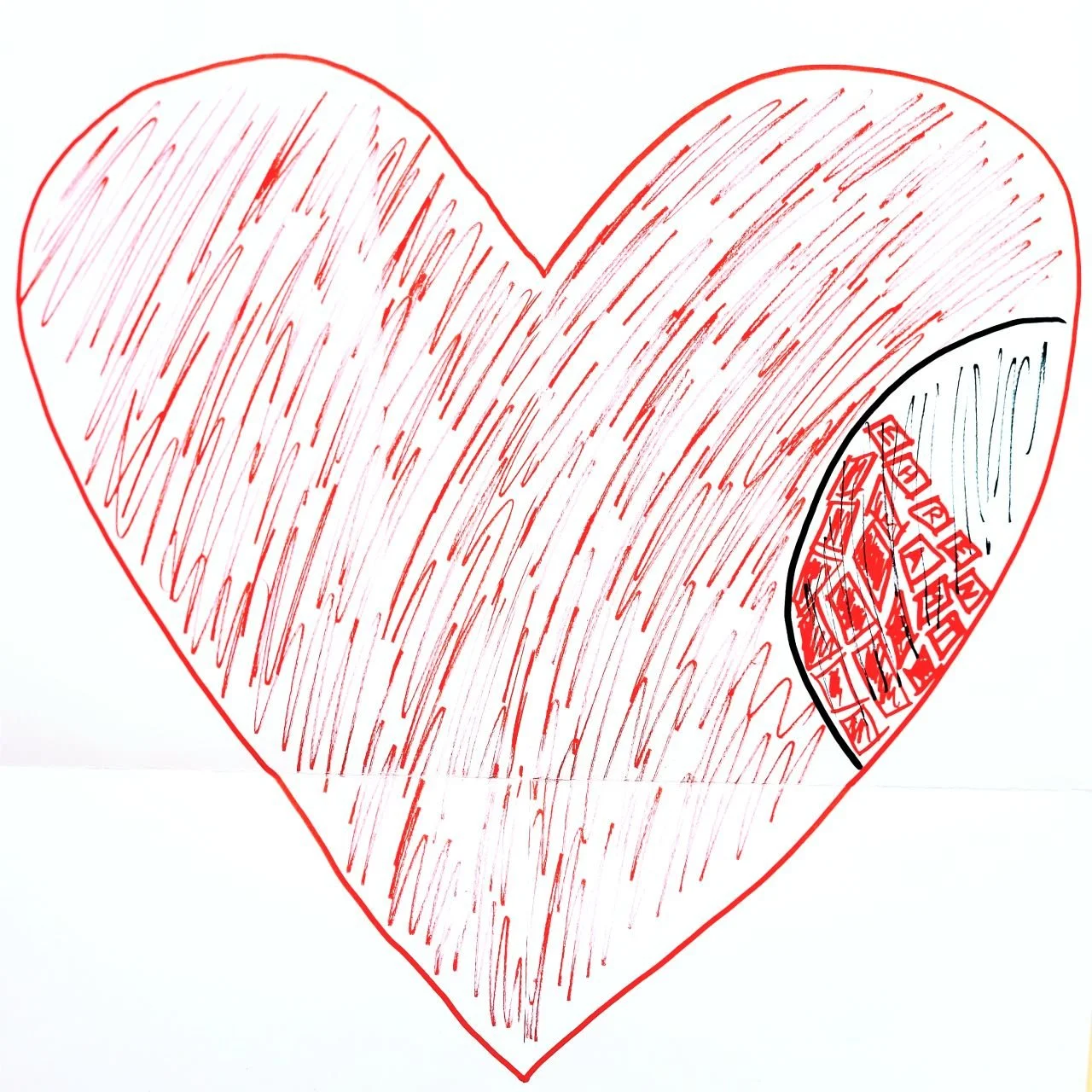
❧ The last topic was a small exercise: what does it mean to each of us to volunteer at a hospice? We were asked to express our answer in a drawing. Below is a picture of my (very simple) sketch: a heart with a hole in it, partly filled with little pieces, some of them carrying the word "Ehrenamt" (roughly, "volunteering"). The idea behind the exercise comes from a concept by psychologist Jonathan Haidt that I'd read about recently. In Haidt's view, we're all born with a hole in our hearts, and it's our task in life to fill it with something sacred, something bigger than ourselves. Left empty, that hole doesn't just create emptiness, but also loneliness and hopelessness. Many people fill it with God, but it can be filled with other things too.
This idea really resonates with me. Even though I'm not religious in the traditional sense, I do believe we all need something sacred, something bigger than ourselves, in our lives, especially in difficult times like these. Personally, I try to fill my hole through practices that honor the sacredness of life and the interconnectedness of everything. My commitment to becoming an end-of-life companion, to witnessing death while honoring life, is one of these practices.