

Becoming an End-of-Life Companion, Part 11: Rituals
We recently talked about using rituals in hospice work. Not the rituals held together with a dying person, that's usually not our place, and something they'll do with their loved ones if they wish to. Instead, we talked about the importance of rituals in general, and how they can support you when you work at a hospice or with someone who is dying.
The hospice I'm affiliated with has its own set of rituals: some are held right after a person's death, some happen during the staff's weekly meetings, and others take place once a year, in memory of everyone who has passed away. One tradition I love, maybe not quite a ritual, but close to one, is that every new person admitted to the hospice receives a star cut out of colored paper with their name on it. The star is placed on the door of their room for the duration of their stay. After they die, their star joins all the others in a large glass jar, a growing memory of everyone who's been there.
Here are a few more things I learned about rituals:
❧ A ritual is different from a routine in that it's carried out with a kind of mindfulness, usually requiring some preparation and a clear intention behind it.
❧ Rituals can be done alone or together, but even when you do them by yourself, they tend to connect you with something bigger than you.
❧ They can offer orientation and comfort, especially during difficult times.
❧ Many rituals lean on symbols, objects, music, or singing to express emotion or create a sense of connection and community. Often, they're less about words and more about doing something in a particular way, or shaping a certain state of mind.
❧ Rituals invite us to pause, even briefly, and reconnect with what really matters to us. That's why we were encouraged to create our own rituals, around the things we care about, and weave them into everyday life.
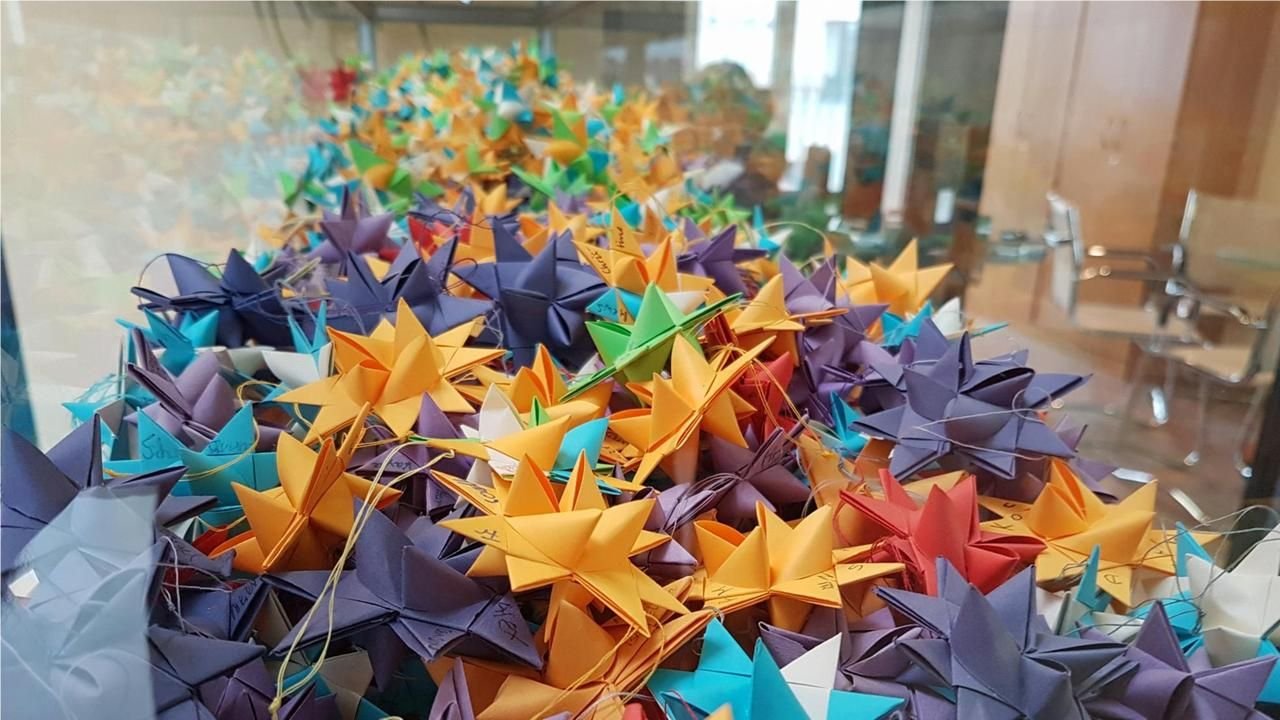
A star for every person